How to encourage your child’s language development at every stage.
From the moment a child is born, parents and caregivers become their first source of communication. Although children develop language at different rates, everyday interactions at home play an important role in supporting this development. Parents can support their child’s language development by responding at their current level and gently encouraging the next stages of communication.
With this in mind, Helena Kruger, a qualified speech-language therapist and member of the Child Language Development Node at Stellenbosch University, shares some ideas parents can incorporate into their daily communication with their children to help encourage language development. These practical tips can be organised into three broad themes:
Language development theme 1: create opportunities for communication
One of the best ways to encourage children to use language is to create situations where they naturally want to communicate. Parents and caregivers can do this by setting up small opportunities during everyday routines.
To communicate their needs, children will have to make use of gestures, sounds or words to ask for more of something, ask for help or comment on something new or silly. You can do this without your child even realising you are doing it!
Examples:
By keeping objects and toys where the child can see them but cannot easily reach them, you will encourage your child to express their intention to you.
Alternatively, you can keep a toy or object the child really wants aside for a moment and wait for the child to ask for it.
Language development theme 2: provide examples of communication
Children learn to communicate by listening to and watching the people around them. Everyday interactions with parents, siblings and other caregivers provide important examples of how language is used.
You can model how language is used to describe objects and actions, communicate feelings and put certain words together.
Tips:
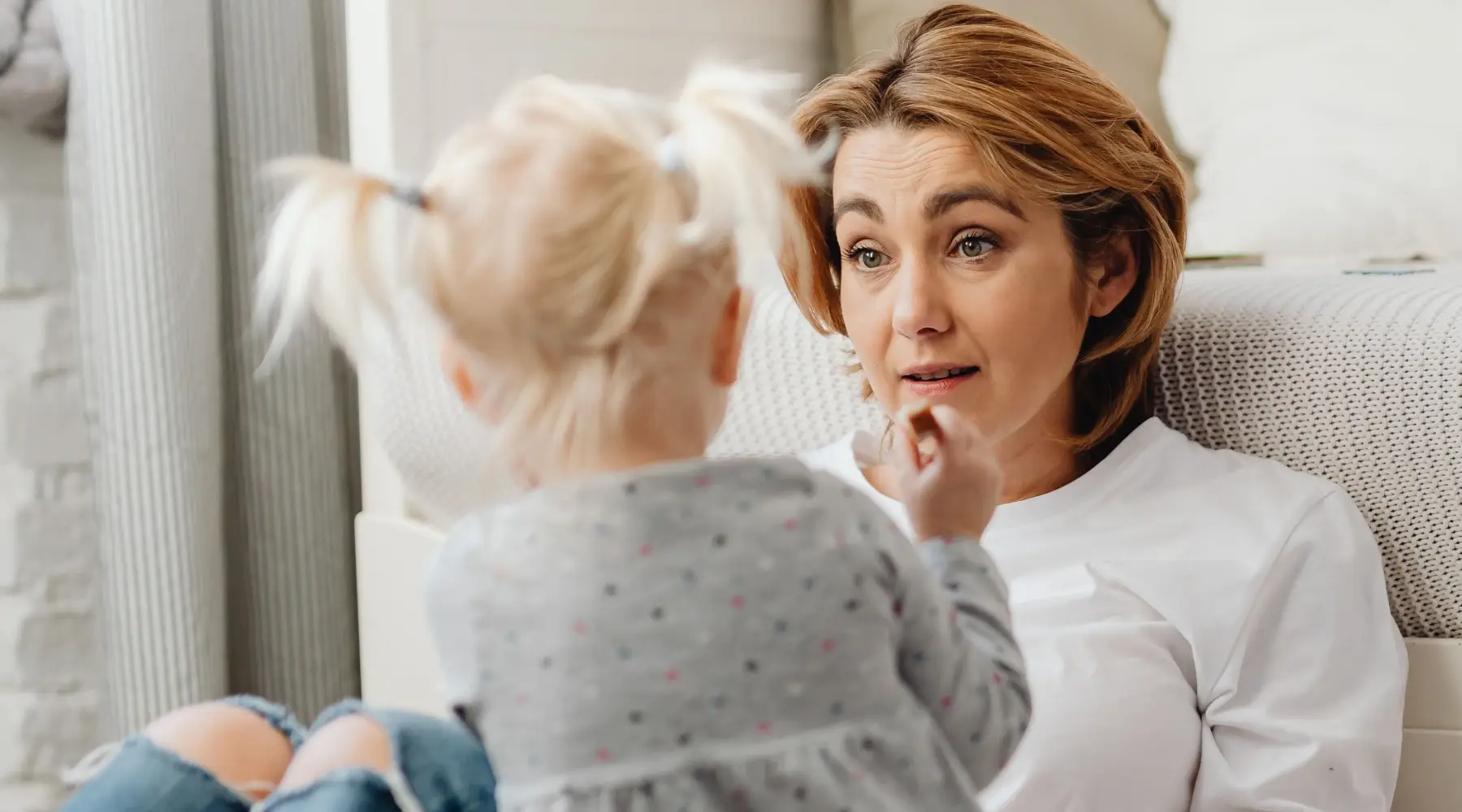
Try speaking a little slower and make sure your child can see your face while you talk. This helps them clearly hear and see how you pronounce different words. You are also giving your child more time to listen to what you are saying and respond appropriately.
You can also emphasise key words in a sentence, for example by slightly stretching them out: “Let’s put on your shooees!”
These small adjustments help highlight important words and make it easier for children to notice and learn them.
Language development theme 3: respond to the child’s communication
Conversations are important parts of our lives and a big part of the way we build relationships. When parents notice and respond to their child’s attempts to communicate, whether through sounds, words, gestures or facial expressions, it shows the child that their communication is meaningful and valued.
Here’s how:
One way to do this is by imitating or copying what they are doing, or responding with facial expressions or gestures. For example, point at their doll and ask if they want it when they walk towards it.
Another great imitation exercise is to repeat the word or sentence your child says, then add one extra word. Repeating what the child said is a good way of acknowledging and encouraging their efforts to communicate.
By adding a word or two to what they said, you are also giving them a more mature language example that they can imitate later. For example, when you both see a dog walking past you and your child says, “Dat doggie”, you can respond with “That’s a big doggie, yes”.
Find more articles on language development here, here and here.
build strong foundations
By creating opportunities to communicate, modelling language and responding to the child’s attempts to connect, parents and caregivers help build strong foundations for lifelong communication and learning.
By the Child Language Development Node, South African Centre for Digital Language Resources (SADiLaR),
University of Stellenbosch