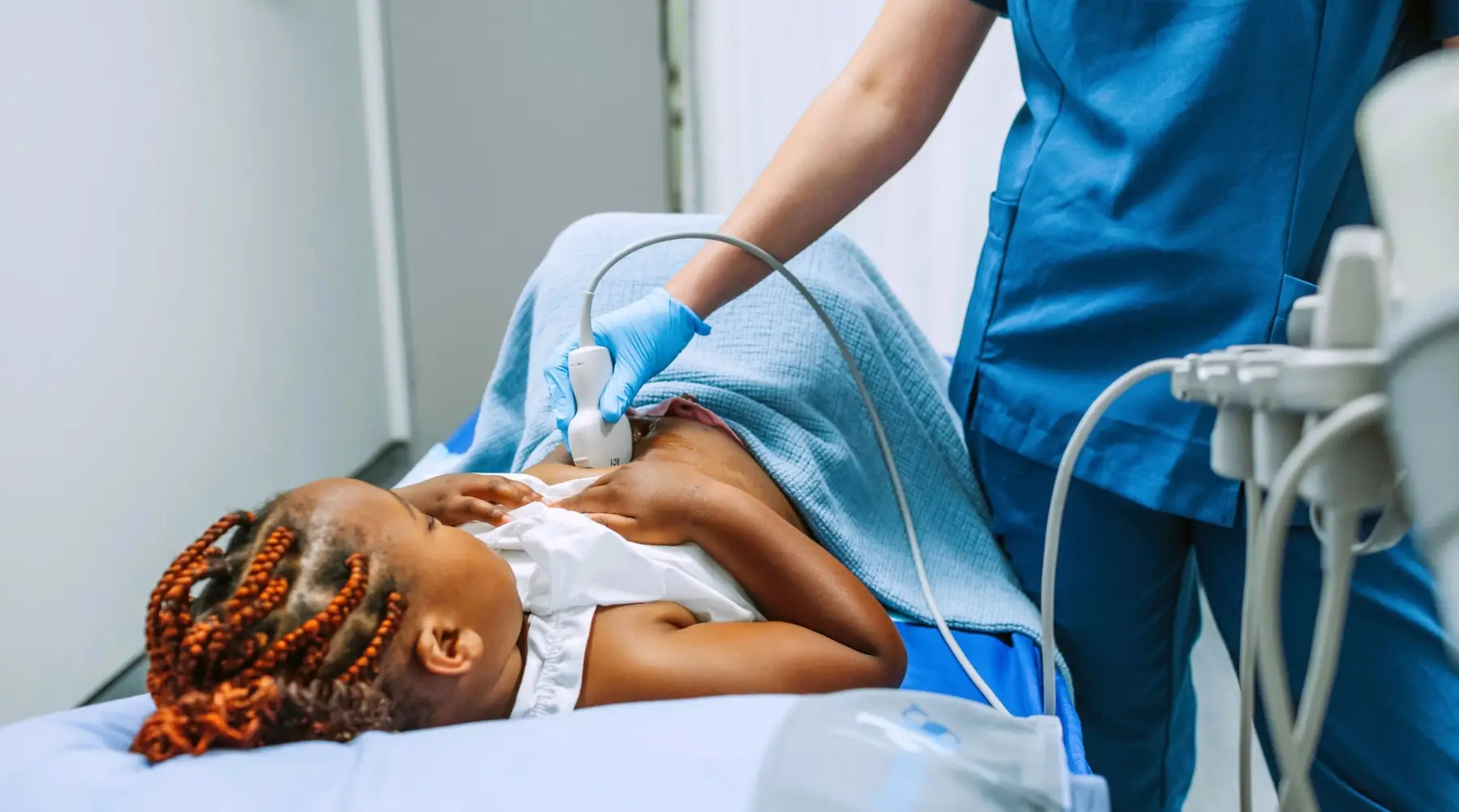
Paediatric radiology is different from adult radiology. We learn more about this highly specialised field of medical imaging.
Paediatric diagnostic imaging is specifically designed for children, from birth to adolescence.
Dr Ebrahim Banderker, a paediatric radiologist at Red Cross War Memorial Children’s Hospital, explains why children need a different approach to imaging and the role of paediatric radiology for children, from birth to adolescence.
why paediatric imaging is important
Children experience and express illness and injury differently from adults. Children are often unable to describe their discomfort, pain or symptoms clearly. Imaging helps doctors understand what is happening inside the body, when language and understanding are limited.
Making an early diagnosis often prevents future pain, disability or developmental issues and reduces the family’s anxiety.
Paediatric imaging is designed with the needs, safety and specific conditions of children in mind. It is a tool for clarity, reassurance and early care.
paediatric radiology differs from adult radiology
- The choice of imaging method is primarily based on how safe it is. The effects of radiation from X-rays and CT scans have a greater risk for a child than an adult, so ultrasound and MRI are preferred where possible.
- Children are often afraid and unsettled because of pain and anxiety, and may require sedation or anaesthesia to make them comfortable during the imaging process.
- Paediatric imaging equipment, anaesthetic apparatus, monitoring and emergency equipment have to be adapted for children of different ages.
“Paediatric radiologists interact with the child and their caregivers far more often than adult radiologists interact with their patients. It is one of the most rewarding aspects of our work.” Dr Banderker says.
Parents are generally more involved and can help the radiologist by confirming the history and symptoms. The radiologist, in turn, can reduce parent anxiety, explain the procedure and obtain consent where needed.
radiation and safety
“Children have rapidly developing cells and tissues, often tightly packed together in small bodies. Children are considered to be 10–15 times more sensitive to radiation,” Dr Banderker explains.
“The guiding principle of all radiation safety is ‘ALARA’, which stands for ‘As Low As Reasonably Achievable’, or, as we say, ‘when benefit clearly outweighs the risk.’
“Ultrasound and MRI do not use radiation, and these should be used where possible.”
common injuries in children requiring imaging
“Common injuries include those from motor vehicle accidents and particularly pedestrian accidents, fractures from falls or playing sport and, unfortunately, increasingly from child abuse, which is sometimes first identified by the radiologist,” says Dr Banderker.
“Children’s bones are different from those of adults. Children have growth plates – areas where the bone is still growing. Injuries to the growth plates require special care because they can affect how a bone develops, which impacts the child’s overall growth.
“Outside of injuries, paediatric imaging also looks at chest infections, abdominal pain, appendicitis, urinary tract problems and hip development in infants. Brain imaging may be used for seizures, headaches or developmental concerns. In essence, imaging can help us rule out serious causes quickly, providing enormous reassurance to families.
parental involvement
Radiographers and radiologists are trained to work gently and calmly with children, and parents are encouraged to be involved and ask questions.
For example, when a child needs to be sedated for an MRI, a parent will stay with them until they are asleep.
“When children feel safe, the scan is quicker, easier and more accurate,” Dr Banderker explains. “The team ensures the child is warm and comfortable and the environment is child-friendly with toys and reading material to distract patients and keep them happy and engaged.”
developments in paediatric radiology
Dr Banderker lists the important developments over the past five years.
- Digital radiography allows for digital manipulation of images, improving image quality and accuracy. Retakes are reduced so there is less radiation involved.
- Ultrasound machines have improved in-depth visualisation of body parts, disease processes and blood vessels.
- CT scanners are faster and offer lower radiation dose options. Some scanners can scan a child’s entire body in less than a second.
- MRI imaging is developing at a galloping pace with faster scanning techniques and finer image detail.
- Functional MRI and the ability to do tissue sampling in cancer imaging are opening many new avenues.
“The scope of interventional radiology techniques (treating, not just diagnosing) is expanding rapidly to make less invasive treatment possible, with fewer complications for patients and much shorter recovery times.
“Paediatric radiology increasingly includes minimally invasive procedures (image-guided drainages, biopsies, nephrostomies, angiography), which can shorten hospital stays and reduce surgical burden,” he concludes.